

In short
Most children are ready for a residential week at camp somewhere between ten and twelve. What matters most is experience of nights away from home, for example at friends', with grandparents or on a school trip. A camp with familiar supervisors and a clear daily routine handles homesickness well.
How to tell they're ready
Your child has slept over at friends' or relatives' without you having to collect them in the evening. They can get dressed, wash and keep track of their things. They want to go: the idea was theirs, or they jumped at it.
If two of these three are true, a week away is realistic. At WuW Camp campers are 10 to 17; younger children can join after a conversation with us.
How supervision works at a good camp
One supervisor for every six to eight children is a good ratio. Supervisors sleep on site and can be reached at night. The day has fixed times for meals, sport, rest and lights out.
Ask providers about exactly these points and how parents can reach the team. At WuW Camp a supervisor sleeps in the room next door in every cabin.
Homesickness: normal and usually short-lived
The second or third evening is the typical time for homesickness. Supervisors know this and respond with closeness, distraction and activities. A phone call often helps less than you'd expect, because it stirs up the missing all over again.
Agree with the camp how they'll reach you if it becomes serious, and trust them to get in touch.
What a sports camp does differently
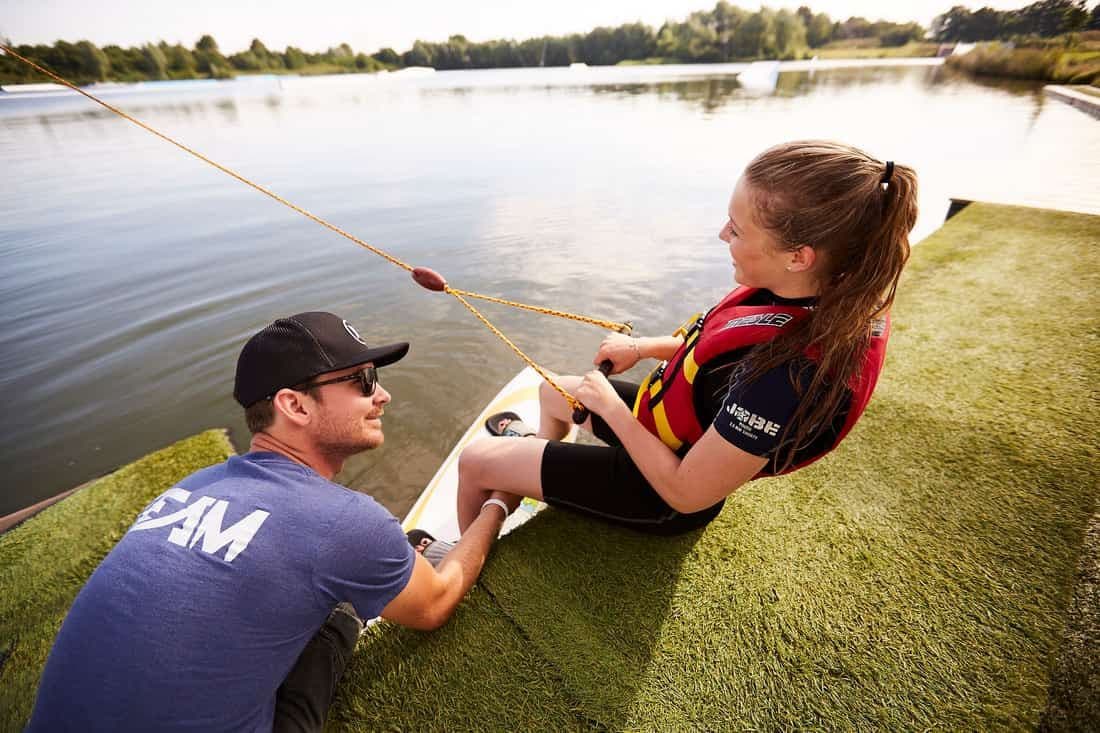
A camp built around one clear sport gives every day a goal. Children see progress they can feel: standing up for the first time, riding the full lap for the first time. That carries them through the wobbly moments.
And a group with a shared goal comes together quickly.